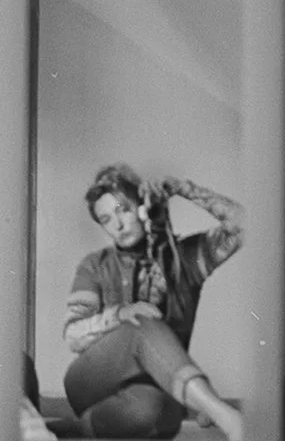
For as long as I can remember, I have been fascinated with my immediate surroundings: the material conditions of them, the people in them, and the systems and circumstances which created them. It could be said I’m an activist. I’ve been fighting for women since I was a child, the deeper stories of that being seen in my work. I’ve slept on curbs in political encampments, distributed food, worked as a protest deescalator and written extensively about the social fabric of American politics and violence from the lenses of womanhood, gender expansiveness, queerness, and working class personhood. None of that, however, is what makes me consider myself an activist. I believe that social change takes place in dialogue rather than in the action of holding a sign or the vacuum of academia. This vacuum exists not solely for the institution, but for the systems surrounding the institution that create inaccessibility to it. I have worked in community education spaces at the non-profit level for groups such as Kimball Jenkins School of Art and WaterFire Arts Center, as well as acted as a teaching assistant in my time at Rhode Island School of Design to Henry Horenstein. Bearing witness to the role of dialogue across the spectrum of age, institution, background, and experience while at times acting as a spur for it, I’ve concluded that the most powerful thing we can do in any economic system, any government structure, and dare I generalize to state any culture, is listening and responding to one another.
The heart of my work is that of my own, at the center of which is a burning desire to witness and be witnessed. I want to look you in your eyes and learn everything you wish to share. I want you to look at me the same. It is a selfish and beautiful urge I at times have to temper. The thesis of my artistic and academic work is as follows —
The artist walks to the edge of the canvas with everything they’ve ever seen, heard, felt, and thought. They make something in that context, and generally in response to direct stimuli. They leave. The viewer then walks up to that thing the artist has just walked away from, which now serves as the direct stimuli they are responding to. The viewer responds to the work with everything they’ve ever seen, heard, felt, and thought. The artist's contexts and intentions have already been thrown into the space between the canvas and themselves, then atop that gets thrown the same of every single audience member. From this emerges cultural dialogue. In that dialogue there percolates recurrencies, themes, and understandings. This is one mechanism from which we derive culture itself — values, norms, social standards and practices. This exists in concurrency with tradition. Tradition and culture exist in concurrency with governance. From all these things we derive politics. Tradition, culture, governance, and politics all share the common element of being driven by discussion or social practice. They require our interaction with another person, or persons.
This thesis drives me to understand the visual rhetoric of time based media and how fluency of it is determined, formed, and fed. With the 2D still image as my starting point, I seek to dissect and disseminate the contexts, connotations, and colloquialisms of photographic language in the Western world while taking into account the film, the animation, and memetics.
I am currently in my final year of candidacy for my BFA in photography at Rhode Island School of Design. I am a Jack Kent Cooke College Scholar and recipient of the Harry Kooriejian Memorial Scholarship. My work has been shown at the New Hampshire Institute of Art, 3S Artspace, the RISD Museum, the Red Eye Gallery, and others. My photographs and writing have been featured by Big Heavy World, Daybreak Magazine, v.1 and Domino Film Photo.
All inquiries can reach out via email.
Talk soon,
Fraenkie